Post-Event Survey Questions: What to Ask Attendees

The event is over, the room is empty and your team is tired but happy. Now you need to know what attendees really thought. The problem: a vague survey only produces vague answers. "Did you enjoy the event?" tells you almost nothing about what to keep, what to fix and what to drop next time.
Good post event survey questions are specific, short and tied to a decision you actually need to make. This guide shows you how to build an event feedback survey that delivers usable answers: event feedback questions grouped by goal, event feedback form questions for registration, check-in and venue, a short sample survey with event feedback examples you can copy, advice on timing and length, and what to do with the results once they arrive.
Why Send a Post-Event Survey?
Your own impression of an event is shaped by the moments you saw. Attendees saw different ones: the queue at check-in, the session that ran over time, the speaker who changed how they think about a topic. A post-event survey collects these views while they are still fresh.
It also gives you figures you can compare. If you ask the same core questions after every event, you can see whether satisfaction, recommendation and content ratings improve over time. And it shows attendees that their opinion matters, which makes them more likely to come back.
Post-Event Survey Questions by Goal
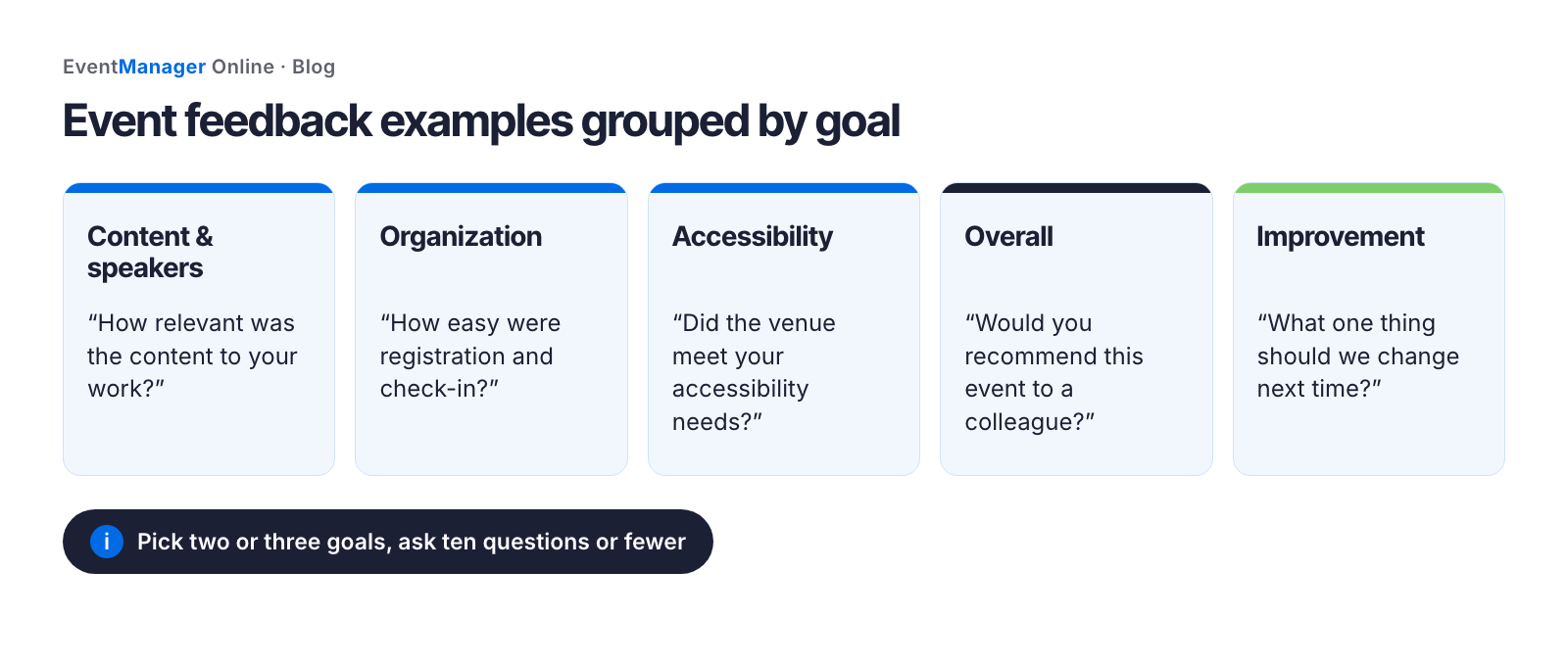
Most question lists are sorted by event type. A more useful approach is to start with what you want to learn. Pick two or three goals and choose questions for those goals only. That keeps the survey short.
Event feedback questions about content and speakers
- How relevant was the content to your work? (scale from 1 to 5)
- Which session was most valuable to you, and why?
- How would you rate the speakers' expertise and presentation? (scale from 1 to 5)
- Was the length of the sessions right, too short or too long?
- Which topic would you like to see at the next event?
Event feedback form questions for registration, check-in and venue
- How easy was it to register? (scale from 1 to 5)
- Did you receive all the information you needed before the event?
- How long did you wait at check-in?
- How would you rate the venue, catering and technology?
- For online participants: how was the audio and video quality?
Accessibility and inclusion questions
- Did the venue meet your accessibility needs?
- Were materials, presentations and signage easy to read and understand?
- Did you feel welcome and able to participate fully?
- Is there anything we could do to make the event more accessible?
Open-ended questions that surface the real story
Scales show you where something is wrong. Open questions tell you why. Use one or two at most, because they take longer to answer.
- What was the most useful thing you take away from this event?
- What one thing should we change next time?
- Is there anything else you would like to tell us?
Event Feedback Examples: A Short Sample Survey
Here is a sample survey with eight questions that covers the most common goals. It takes about two to three minutes to complete.
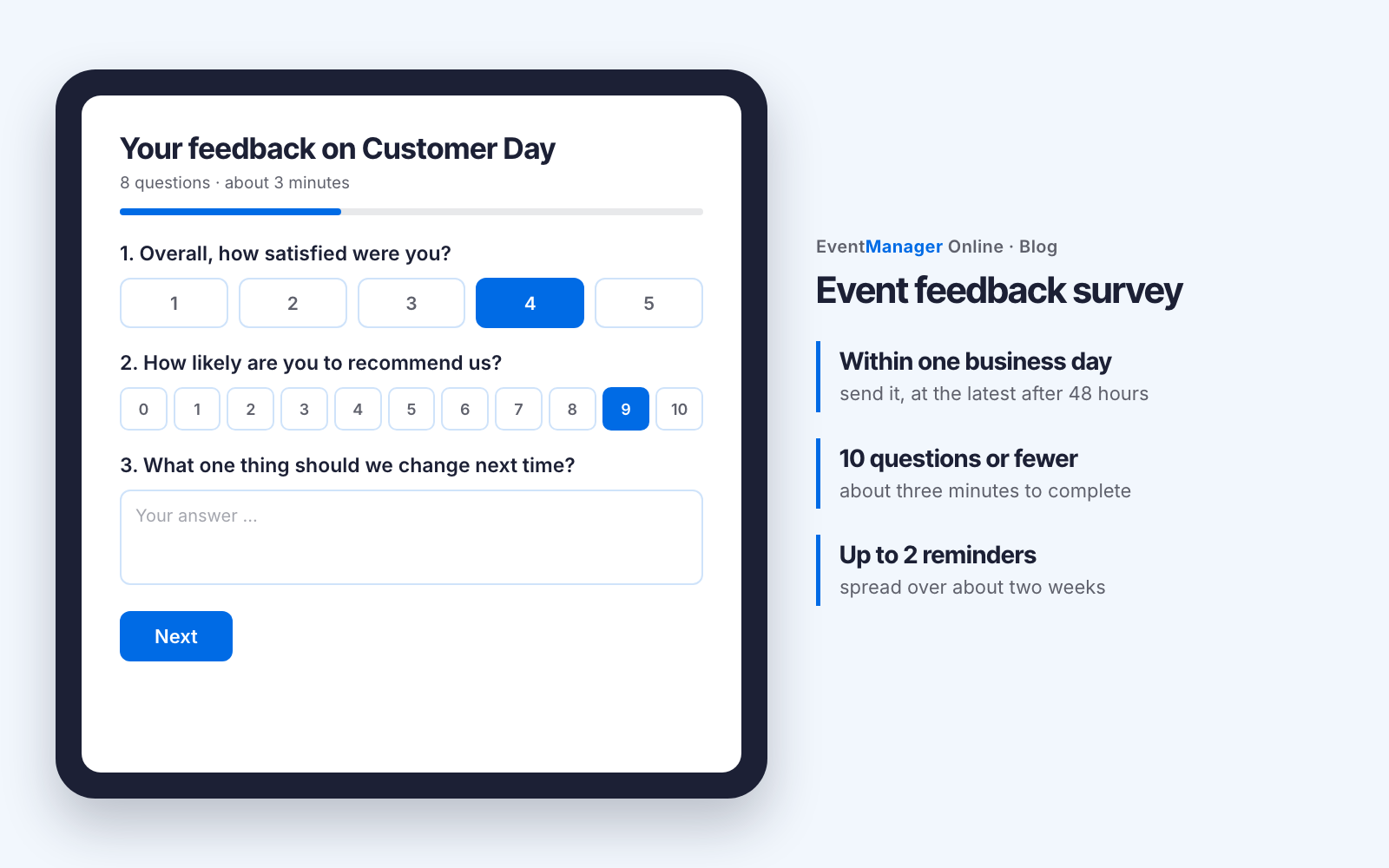
- Overall, how satisfied were you with the event? (1 = very dissatisfied, 5 = very satisfied)
- How likely are you to recommend this event to a colleague? (0 to 10, Net Promoter Score)
- How relevant was the content to your work? (1 to 5)
- Which session was most valuable to you?
- How easy were registration and check-in? (1 to 5)
- Did the venue meet your accessibility needs? (yes / partly / no)
- What one thing should we change next time?
- May we contact you about future events? (yes / no)
A short example of how a single question can lead to change: suppose a third of respondents rate check-in poorly and mention long queues in the comments. For the next event, the team adds a second check-in desk and sends QR codes with the confirmation email. One question, one concrete improvement, and the same question next time shows whether it worked.
How to Run an Event Feedback Survey
When to send it, how long it should be, and how to get more responses
Timing: send the survey while the event is still fresh. SurveyMonkey's post-event survey guide recommends sending your main survey within one business day. MPI suggests that sending within 24 to 48 hours is ideal. Both point to the same rule: the sooner, the better.
Length: keep it to 10 questions or fewer. According to SurveyMonkey, most people can finish that in about three minutes. Every additional question lowers the response rate.
Reminders: send up to two reminders to people who have not answered, spread over about two weeks. After that, more reminders mostly cause annoyance.
More tips for a higher response rate:
- Say in the first line how long the survey takes.
- Make it work well on a smartphone.
- Combine it with something attendees want anyway, such as the slides or a certificate of attendance.
- Explain what you will do with the answers.
- Only ask for personal data if you really need it, and say so in your privacy notice.
What to Do With the Results
Many teams send the survey and then let the results sit in a spreadsheet. The real value comes from what happens next.
- Analyze: look at averages and the distribution of answers, not just the mean. Read every open comment and group them by topic. Compare the results with your event goals and with previous events.
- Share with the team: present the three main findings in your review meeting and agree on concrete changes, each with an owner. Pass speaker feedback on to the speakers.
- Close the loop with attendees: tell participants what you learned and what you will change. A short note in the next invitation ("You told us check-in took too long, so we have added a second desk") builds trust and raises response rates for the next survey.
Over time, consistent survey results become a reliable part of your event reporting, alongside registrations, attendance and revenue.
FAQs
What are some good questions to ask about an event?
Good questions cover overall satisfaction, likelihood to recommend, relevance of the content, quality of speakers, organization (registration, check-in, venue) and accessibility. Add one open question about what should change next time.
What are some good feedback questions to ask?
Good feedback questions are specific and tied to a decision. "How relevant was the content to your work?" is more useful than "Did you like the event?". Combine rating scales for comparable figures with one or two open questions for the reasons behind them.
What are 5 good survey questions examples?
How satisfied were you with the event overall? How likely are you to recommend it to a colleague? How relevant was the content to your work? How easy were registration and check-in? What one thing should we change next time?
When should you send a post-event survey?
Ideally within one business day, at the latest within 48 hours. Afterwards, send up to two reminders over about two weeks to people who have not responded.
How long should a post-event survey be?
Ten questions or fewer, which most people can complete in about three minutes. Use mostly scale and multiple-choice questions and limit open questions to one or two.
Conclusion
A useful post-event survey is short, sent quickly and built around clear goals. Choose questions for the two or three things you want to learn, keep it to ten questions or fewer, send it within a day and follow up with up to two reminders. Most importantly, act on the results and tell attendees what changed.
If you want invitations, registration, check-in and feedback surveys in one attendee management system, try EventManager Online free for 14 days.